EVE LAWSON RECIPES
Spanish Fish Stew ~ Serves 4
Much of this stew can be prepared in advance. Get everything up to the point of adding the potatoes, beans and fish to the tomato and pepper sauce then, when ready to eat, reheat the sauce and add the vegetables and fish. Finish cooking the dish as usual.
This is a meal in itself but I like to serve it with focaccia or some nice crusty bread to mop up the sauce. Feel free to adapt - I love potatoes but butter beans are equally delicious in this stew. If you have lots of courgettes or runner beans, use them instead of the French beans. Use peeled and diced fresh tomatoes instead of canned - you will need about six medium sized tomatoes. Finally, enjoy with a cold glass of Rioja Blanco!
900g waxy or new potatoes, peeled and cubed
200g green beans, trimmed
50ml olive oil
2 onions, thinly sliced
6 garlic cloves, thinly sliced
2 tsp smoked paprika
75g chorizo, diced
1 large green pepper (or 150g padron peppers), de-seeded and sliced
150ml dry white wine
300ml water
2 tblsp tomato paste (I use La Bomba)
1 x 400g can chopped tomatoes
a pinch of chilli flakes
600g mixed fish, e.g. cod, haddock, hake, salmon, cut into similar size pieces
200g raw prawns, shelled and de-veined
salt and pepper
juice of ½-1 lemon
chopped parsley, to finish

Steam the potatoes until they are just cooked. Remove from the heat and set aside. Bring a pan of water to the boil and plunge in the beans. Cook for 2 minutes, then drain and refresh in cold water. Drain again and set the beans aside.
Heat the oil in a shallow, flameproof, lidded pan. Add the onions and garlic and fry gently until softened but not brown. Add the paprika, stir well, then add the chorizo and green pepper. Stir in the wine, water, tomato paste, chopped tomatoes and chilli flakes. Season with salt and pepper and simmer gently for a few minutes.
Add the potatoes and beans to the pan, then gently incorporate the fish and prawns. Cover and simmer for a further 8-10 minutes or until everything is piping hot and the fish and prawns are fully cooked. Remove from the heat, drizzle over the lemon juice and sprinkle with parsley before serving in deep dishes.
Note: Use 2 x 235g cans / or 1 x 660g jar of butter beans, drained, instead of potatoes.
Celeriac Remoulade
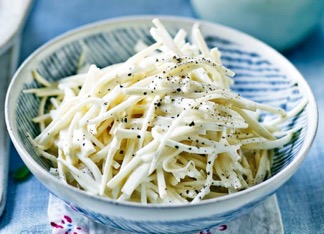
Peel, then shred a medium-sized (450g) celeriac - a mandolin is helpful for this, but watch your fingers! For a perfect celeriac remoulade, the shreds should not be too fine, neither should they be thicker than a matchstick.
Toss the shredded celeriac in the juice of half a lemon - this will prevent it from discolouring. In a large bowl, mix together 4 heaped tblsp of good mayonnaise, 2 tblsp of smooth Dijon mustard, 2 tblsp of double cream or crème fraîche and 2 tblsp of finely chopped parsley.
Season with salt and black pepper, then fold into the shredded celeriac. Best eaten the same day!
Pear, Cinnamon and Red Onion Chutney
1.5kg very firm pears, peeled, cored and cut into chunks
450g red onions, peeled and chopped
450g green or firm red tomatoes, cores removed and flesh chopped
100g stoned dates, chopped
200g raisins
200g celery, sliced
400g granulated sugar
400g muscovado sugar
600ml cider vinegar
2 cinnamon sticks, broken in two if large
1 tsp ground ginger
1 tsp black or yellow mustard seeds
15g salt
½ tsp whole black peppercorns
5 small dried chillies
8 allspice berries
8 cardamom pods, husks discarded and seeds lightly crushed
5 cloves
1 tsp coriander seeds
Gather together a good quantity of clean jam jars before you begin - small or pretty jars of preserves make great gifts! Place the jars in a very low oven to warm.
Prepare all the fruit and vegetables and place in a large preserving pan. Mix the sugars and vinegar in a saucepan. Heat until the sugar has dissolved, then pour over the fruit and vegetables. Add the cinnamon sticks, ground ginger, mustard seeds and salt. Tie up the remaining spices in a piece of muslin or place them in a bought bouquet garni, or infuser, bag (available from Amazon and kitchen shops) and add to the chutney.
Bring to the boil, then lower the heat and allow the chutney to bubble away gently, stirring frequently, until there is very little free liquid. Remove and discard the spice bag together with the cinnamon sticks, then ladle the cooked chutney into the clean, warm jars. Cover with waxed discs, seal the jars and don't forget to label them. Eat now or store for a later date.
Roasted Figs and Plums ~ Serves 6
fig leaves, rinsed
6 ripe figs
6 ripe plums, halved and stones removed
a small glass of rosé or white wine
a generous slug of elderflower cordial
caster sugar
Preheat the oven to 200ºC / Fan 180ºC / Gas 6. Cut the tough stems off several fresh fig leaves and use to line an ovenproof dish. Top and tail the figs and cut in half. Place both the figs and the plums skin side down on top of the fig leaves. Splosh over the wine and elderflower cordial and sprinkle fairly liberally with sugar (about 2 tablespoons).
Bake for approximately 20 minutes or until the fruit is softened but still holding its shape. You can pop the dish under a hot grill to get a nice caramelised finish but be careful not to burn the fig leaves too much. Lift the fruit off the fig leaves and serve, warm or cold, drizzled with the beautiful pink juices that have collected in the dish. Serve with Fig Leaf Custard, cream or vanilla ice cream.
Fig Leaf Custard ~ makes approx. 500ml
The jury is out as to whether to *toast the fig leaves, or not. I have made this custard without toasting the leaves first and the result is also good. I think toasting the leaves just slightly intensifies the flavour.
6 fresh fig leaves, rinsed and stems removed
500ml single cream, or half full fat milk and half cream
5 egg yolks
40g caster sugar
* See note above - Preheat the grill and lay the fig leaves out on the grill pan (it doesn't matter if they overlap). Toast for a few minutes or until the leaves begin to curl up and the edges are pale caramel colour. Remove from the heat and set aside. Half fill the sink with cold water.
Pour the cream into a medium-sized saucepan and heat gently until it is just beginning to bubble. Add the fig leaves to the cream and set aside to infuse for 20-30 minutes. Whisk together the egg yolks and sugar then strain in the infused cream, whisking well.
Rinse the pan then return the custard to the pan and cook over a low to medium heat for about 10 minutes, stirring all the time! When cooked, the custard should be thick enough to lightly coat the back of a wooden spoon. To stop the custard cooking further, sit the pan in the sink of cold water and continue stirring for a minute or two.
Smoked Mackerel and Potato Gratin
1 kg floury potatoes, such as King Edward’s or Maris Piper, peeled
1 onion, peeled and sliced
300ml full cream milk
300ml double cream
2 cloves garlic, crushed
½ tsp salt
freshly chopped parsley
300g peppered smoked mackerel fillets, skin removed
Cut the potatoes into thick slices and place in a large pan with the onion, milk, cream, garlic and salt. Bring to the boil and simmer until the potatoes are just tender. Arrange half the potato and onion mixture over the base of an ovenproof dish. Break the mackerel into chunks and arrange on top of the potatoes, sprinkle with parsley, then top with the remaining potatoes. When ready to cook, heat the oven to 200ºC / Gas 6 and bake for 20 - 25 minutes or until bubbly and browned. Leave in a warm place for 5 - 10 minutes before serving.
Raspberry and Vanilla Muffins (Makes 6 large muffins)
For the muffins:
200g plain flour
2 tsp baking powder
2 eggs
125g caster sugar
100g butter, melted
150ml full fat milk
1 tsp vanilla essence
200g fresh or frozen raspberries (do not defrost)
For the topping:
50g butter, cubed
50g plain flour
30g dark muscovado sugar
pinch salt
Heat the oven to 190ºC / Gas 5. Line a deep muffin pan with 6 large paper muffin cups.
To make the topping: Place the butter, flour, sugar and salt in a bowl and quickly rub in the butter. You could do this with a fork as you do not want to overwork the mixture – it should remain quite lumpy.
To make the muffins: Combine the flour and baking powder in a large bowl. In another bowl, whisk together the eggs and caster sugar until they are light and fluffy then gradually stir in the melted butter, milk and vanilla essence. Fold this mixture into the dry flour - being careful not to over mix - then finally stir in the raspberries.
Divide the mixture between the muffin cases - the cases should be quite full - then sprinkle about a tablespoon of the crumble mix over each.
Bake for 30 -35 mins until they are well risen and a skewer inserted into the centre of the muffins comes out clean.
Note: for speed, ease or fewer calories, you can skip the crumble topping but taste tests confirm that it does make the muffins exceedingly yummy.
Fig and Apple Chutney (Makes approx. 6 medium sized jars.)
2 medium sized onions, peeled and chopped
2 cloves garlic, peeled and chopped
3 tblsp vegetable oil
12 -14 fresh figs, stalks and rough end bit (ostiole) removed, roughly chopped
400g dried figs, stalks removed and roughly chopped
2 large tart eating apples, peeled, cored and chopped quite small
200g sultanas
a thumb-sized piece of ginger, peeled and very finely chopped
1 heaped tsp sea salt
1 heaped tsp of each of the following spices: ground coriander and allspice
½ tsp each of ground cloves and chilli flakes
200ml malt vinegar
200ml cider or wine vinegar
200ml freshly squeezed orange juice
150g soft brown sugar
150g dark brown muscovado sugar
Using a large preserving pan, heat the oil and lightly fry the onions, cooking gently for about 5 minutes until they are softened but not browned.
Add the prepared figs, apples, sultanas, ginger, salt and spices to the pan and pour over the vinegar. Simmer gently for 15-20 minutes, stirring often to make sure the mixture is not catching on the base of the pan.
Stir in the sugar and, when the sugar has dissolved, bring to the boil. Reduce the heat and simmer gently for a further 10-15 minutes, stirring frequently, until the mixture has thickened. You should take the chutney off the heat when it is still a bit thinner than you would like your finished chutney to be as it will thicken a little bit more in the jar. Spoon into clean, warm jars, cover with waxed paper discs and allow to cool slightly before sealing each jar with a screw-top lid.
Store until Christmas – or eat now! Great with cheese.
Jane’s Courgette Pickle (Makes approx. 6-8 medium sized jars.)
10 medium sized courgettes, sliced approx. 3mm (1/8”) thickness (a food processor, the side of your grater or a mandolin will speed this up)
½ a large red onion finely sliced
1 chilli finely sliced (optional)
25g salt
225ml red wine vinegar
110g light muscovado sugar
110g caster sugar
pinch dried mustard powder
1 heaped teaspoon mustard seed
½ level teaspoon turmeric
1 heaped teaspoon celery seed
In a large bowl, combine the first three ingredients with the salt and mix thoroughly. Leave for 2 hours then rinse off the salt under cold water and drain well in a colander.
Put vinegar, sugars and spices into a large saucepan and bring to the boil. Boil 2-3 minutes, remove from heat and add the drained vegetables. Leave to steep for at least 2 hours.
Return pan to heat and bring quickly to the boil and cook for a further 5 minutes. Spoon the vegetables immediately into warmed, sterilised jars and top with the liquid. Seal and leave 2-3 days before consuming.
This pickle will keep for up to up to 2 years - but I am sure you will have eaten it all before then!
With thanks to Jane Lewis for this recipe.
Sweet Chilli and Tomato Jam (Makes approx. 6 medium sized jars.)
Versatile Sweet Chilli and Tomato Jam uses up a good few tomatoes and can be used as a relish, a dip or as a glaze for barbecued meat and chicken. There isn’t much fiddling about with this recipe, it uses the whole tomato - skin and seeds. Do not remove the tomato seeds as they contain pectin which will help the jam set. Leave in a few chilli seeds if you like it a little bit hotter!
1 kg ripe tomatoes
120g red peppers, tops and seeds removed
120g red chillies seeds removed, roughly chopped
4 cloves garlic, peeled
80g fresh ginger, peeled and roughly chopped
60ml fish sauce
600g granulated sugar
200ml red or white wine vinegar
3 star anise
Cut half the quantity of tomatoes into quarters and remove any tough central cores. Cut each quarter into 3 or four pieces and add to a large deep pan. Roughly chop the remaining tomatoes and red pepper and puree with the chillies, garlic, ginger and fish sauce in a food processor then add this mixture to the pan.
Add the sugar, vinegar and star anise and gently heat until the sugar has dissolved. Bring to the boil, then reduce the heat to a vigorous simmer and cook for about 30 minutes, stirring frequently. When the jam has thickened, remove the star anise and pour into clean, warm jam jars. Cover with waxed paper discs and seal. Store in a cool place.
Smoked Haddock, Bean & Leek Soup (Serves 4-6)
1 onion, peeled and roughly chopped
4 leeks, trimmed, rinsed and sliced
olive oil
1 litre fish or vegetable stock (not too salty)
400g can cannellini or butter beans
350g undyed smoked haddock, skinned, de-boned and cut into 2cm chunks
100g French beans, cut into 4cm lengths
black pepper
freshly squeezed lemon juice, to taste
freshly chopped parsley
Heat a little oil in a frying pan and gently fry the onion and leeks until soft but not brown. Heat the stock to boiling point in a medium-sized saucepan and add the French beans. Simmer for 3 minutes, then remove with a slotted spoon and set aside.
Add half the canned beans and their liquid to the pan and mash roughly. Add the remaining canned beans and their liquid together with the cooked onions and leeks. Cover and cook for another few minutes.
When nearly ready to serve, add the fish and cook gently until the flesh becomes white. Season with plenty of black pepper - you probably won't need salt as the fish is salty - and a squeeze or two of lemon juice, to taste. Return the French beans to the soup and sprinkle in the chopped parsley. Serve in warmed bowls.
Sticky Apple Sauce Cake with Whisky Caramel Sauce (Serves 8 - 10)
For the apple sauce
300g cooking apples, peeled, cored and chopped
a knob of butter
50g caster sugar
For the cake
100g butter
175g light soft brown sugar
3 tblsp golden syrup
2 eggs
1 tsp vanilla extract
200g self-raising flour
1 tsp bicarbonate of soda
For the sauce
100g dark soft brown sugar
100g butter
2 tblsps whisky (rum, calvados or brandy)
200ml double cream
Preheat the oven to 190ºC / Gas 5. Grease and line a 23cm spring-sided cake tin. Prepare the apple sauce: place the apples, a knob of butter and the caster sugar in a saucepan. Add 50ml water, cover and cook over a gentle heat until they are soft and fluffy, stirring frequently to prevent the apples catching! Beat well to make a smooth apple sauce.
To make the cake, beat the butter and soft brown sugar until light and fluffy. Add the golden syrup, eggs and vanilla extract and mix well. Don't worry if it is a little bit curdled at this point. Carefully fold the self-raising flour into the mixture.
Next, the alchemy! Add the bicarbonate of soda to the apple sauce which will cause the sauce to bubble up. Whilst this is happening, quickly mix the sauce into the cake mixture. Pour into the cake tin and bake for approx. 30 minutes or until the cake is dark golden-brown and springy to the touch.
To make the whiskey caramel sauce, place the dark soft brown sugar and butter into a saucepan and cook gently until the sugar has melted. Pour in the cream and whisky (or other spirit) and simmer gently for about 5 minutes or until the mixture thickens slightly. Serve the cake and sauce slightly warm.
Fresh Tomato and Lemongrass Soup (Serves 4-6)
500g firm, fresh tomatoes
1 lemongrass stalk
1 red chilli
1 x 400g can of chopped tomatoes
2 slices fresh ginger
1 litre chicken or vegetable stock
1-2 tsps fish sauce
a squeeze of lemon juice, if needed
fresh coriander, to serve
Roughly chop the fresh tomatoes. Bash the lemongrass stalk with a rolling pin or hammer and cut into pieces. Slice the chilli in two, lengthways, removing some of the seeds - leaving some seeds will give the soup a pleasant kick. Bring the stock to the boil in a large saucepan. Add all the prepared ingredients and simmer gently for 10 minutes. When the tomatoes have softened, mash them gently with a potato masher.
Pour the soup into a large sieve, over a second saucepan or bowl, and gently push through with a wooden spoon, leaving all the tomato skins and seed etc. in the sieve.
Taste the soup - it should be light and fragrant. Season with fish sauce and add a squeeze of lemon juice, if needed. Serve hot or chilled with chopped coriander.
Apple Butter Cake with Cinnamon Crumble Topping (Serves 8 - 10)
A delicious cake to share at teatime after a long walk or, serve warm with clotted cream for a rich and delectable dessert.
3 eating apples, peeled, cored and thinly sliced
2 tsps ground cinnamon
50g soft dark brown sugar
250g butter
250g self-raising flour
200g caster sugar
4 eggs, beaten
To serve: clotted cream
Preheat the oven to 180ºC / Gas 4. Grease and line a 23cm round cake tin. Mix the apples with 1 teaspoon of the cinnamon and set aside.
Place the dark brown sugar in a mixing bowl together with 50g each of the butter and flour. Add the remaining cinnamon and rub with the fingertips to make a rough lumpy crumble.
Next, put the caster sugar and eggs into a large bowl and using an electric mixer, whisk for about 10 minutes, or until the mixture is pale, thick and the whisk leaves a trail on the surface of the mixture. Don’t rush this stage as it is important to whisk until the mixture is thick.
Melt the remaining butter and when slightly cooled, drizzle into the whisked egg mixture, folding it in carefully to keep the mixture light and airy. Sieve the remaining flour into the mixture and fold it in gently. Pour the mixture into the prepared cake tin and scatter the apple slices over the top, followed by the crumble mixture.
Bake for 50-55 minutes or until the cake is firm in the centre and golden brown.
Roasted Carrot and Beetroot Salad with Gremolata (Serves 4)
Use a mixture of golden and red beets, if you have them, for a salad with all the colours of autumn. These roasted vegetables served hot with the aromatic gremolata make a great dish in their own right, try serving with the Sunday roast.
600g carrots and beetroots, peeled
oil for roasting
100g feta cheese, crumbled
2 tblsps pine nuts, toasted
a large bowl of mixed salad leaves
For the gremolata
1 clove garlic, peeled
1 bunch parsley, about 75g
grated zest of one lemon
For the dressing
1 tsp honey
½ tsp sea salt
black pepper
1 tblsp white wine vinegar or lemon juice
2 tblsps olive oil
Preheat the oven to 200ºC / Gas 6.
Cut the carrots and beetroots into chunky chip-sized wedges. Place them at separate ends of a roasting tin. Drizzle with a little oil and roast for 30-40 minutes or until the vegetables are nicely cooked and lovely and dark golden-brown on the edges.
Prepare the gremolata. Finely chop all the ingredients together and set aside. For the dressing, whisk together the ingredients, seasoning with black pepper to taste.
Drizzle half the dressing over the cooked vegetables and sprinkle with half the gremolata. Allow everything to cool. Toss the salad leaves in the remaining dressing and arrange on a serving platter. Scatter over the roasted vegetables, followed by the cheese, pine nuts and remaining gremolata.
Slow Cooked Courgettes with Chilli and Mint (Serves 4 - 6)
Don't use massive courgettes for this recipe but if the courgettes are a little on the large side, slice them lengthways and scoop out the spongy centres before using in the recipe below.
approximately 1kg courgettes, topped and tailed
50g butter
2 tblsps olive oil
3 cloves garlic, peeled and finely chopped
a good pinch dried red chilli flakes
salt and black pepper
a handful of fresh mint leaves, finely shredded
Slice the courgettes into thin rounds. Gently heat the butter and oil in a large pan or skillet and when the butter is melted, add the garlic and chilli. Cook gently for a few minutes, until the garlic is soft but not browned.
Add the courgettes and season with salt and pepper. Cover and cook over a low heat for about 40 minutes, stirring regularly, so that the courgettes don't stick to the pan. When cooked they should be very soft. Stir through the mint and serve warm with roast lamb or white fish such as sea bass.
Creamy Rice Pudding with Raspberry Compote (Serves 6 - 8)
This sauce goes well with cold ham as well charcuterie and pork pies. Simply add chopped dill to make the perfect Mustard Dill Sauce to serve with gravadlax or smoked salmon.
250g pudding rice
1 litre full cream milk
1 vanilla pod, split lengthways (optional)
a few pieces of lemon peel, pith removed
75-100g caster sugar
200ml double cream
For the compote
225g raspberries
50g caster sugar
juice of ½ - 1 lemon
Place all the ingredients for the rice pudding into a heavy-based saucepan - or a double boiler, if you have one. Bring to a simmer over medium heat, stirring well to break up the rice. Reduce the heat to very low, cover loosely and cook for 20 minutes or until the rice is cooked but still has a little 'bite'. This will take longer in a double boiler.
Meanwhile, prepare the raspberry compote. Place the raspberries and sugar in a heavy-based pan and heat gently until the juices are released and the sugar melted. Add lemon juice and bring to a gentle boil for 2-3 minutes. Remove from the heat and leave to cool. Keep refrigerated.
Remove the lemon peel and vanilla pod (if using) and serve the rice pudding warm, or chilled in small pots, with the raspberry compote.
Wild Blackberry and Orange Crisp (Serves 4)
approx. 450g blackberries
2 tblsp caster sugar
finely grated zest of 1 large orange
For the topping
75g plain flour
50g dark muscovado sugar
finely grated zest of 1 large orange
75g chilled butter
Preheat the oven to 200°C / Gas 6. Mix together the blackberries, caster sugar & the zest of 1 large orange then tip into an ovenproof serving dish.
To make the topping, mix the flour & brown sugar and stir in the zest of 1 large orange. Cut the chilled butter roughly into cubes and add to the flour. Rub the butter into the flour but do not overwork the mixture - aim to still see little lumps of butter and sugar in the mix as this will give you the crispy finish.
Spoon the mixture over the blackberries and bake for 15 - 20 minutes or until the topping is golden brown and the blackberries have released their juices.
Serve with vanilla ice cream, thick fresh cream or clotted cream.
Brian's Duck with Sanguinello & Red Wine Sauce (Serves 4)
30ml olive oil
1 small onion, finely chopped
2 cloves garlic, finely chopped
1 tsp. dried sage or 1 tblsp chopped fresh sage
2 tblsps redcurrant or blackberry and apple jelly
1 tblsp soy sauce
125ml sanguinello or orange juice
125 ml red wine
black pepper, to taste
4 duck breasts
course sea salt
To serve: 1kg floury potatoes, such as King Edward, peeled and steamed
For the sauce: In a small pan heat the oil and sauté the onion and the garlic for 3 minutes or until soft but not brown. Add the remaining sauce ingredients and stir well. Reduce the heat and simmer for about 20 minutes or until slightly reduced. You can prepare the sauce whenever you like - just warm up when needed, strained or not, as you wish.
When ready to cook the duck, use a very sharp knife to lightly score the duck fat in two directions, making cuts about 0.5cm apart so that you have a diamond pattern on the skin. Rub sea salt well into the skin.
Heat a heavy-based frying pan over a medium high heat. Place the duck breast fat side down in the pan and immediately reduce the heat to cook the duck slowly. Grind black pepper over the flesh side and cook for 5-6 minutes depending on the size of the duck breasts. Turn and cook for a further 5-6 minutes.
Transfer the duck to a carving board and cover with foil. Leave to rest for 5-10 minutes (this is important!) Add the prepared potatoes to the duck fat and fry until hot and crispy. To serve the duck, slice each duck breast diagonally and fan out onto warmed serving plates. Spoon over the sauce and serve with the sautéed potatoes.
Recipe: Brian Bush
Raspberry and Redcurrant Conserve - makes 4 x 250ml jars
The flavour of raspberries and redcurrants combine very well. This is a fresh-flavoured jam with a soft, slightly runny consistency. Perfect on a warm baguette, hot scones or even spooned onto rice pudding or the morning porridge.
500g granulated sugar
750g raspberries
300g redcurrants, stalks removed
Measure the sugar into a heat-proof bowl and warm, together with some clean jam jars, in a very low oven for 30-40 minutes. Place the fruit in a wide, deep pan and slowly cook until the juices are released. Reduce the heat and add the warmed sugar, stirring gently until the sugar has completely dissolved. Increase the heat and bring to a rapid boil for 3-4 minutes. Remove from the heat and skim off any foam. Leave to sit for 2-3 minutes before pouring into the prepared jars. Cover with waxed discs and seal.
Note: Store in the fridge after opening.
Corn bread (Serves 4 - 6)
Perfect to serve with thick stews and soups or on bonfire night with sausages and beans. Cornmeal is the same as maizemeal and is available from health food shops and some supermarkets.
1 tblsp butter, for greasing
100g / 4oz plain flour
100g / 4oz corn meal (maizemeal)
1 tblsp caster sugar
1 tsp baking powder
½ tsp salt
1 egg
150ml / ¼ pint milk or buttermilk
75g / 3oz butter, melted
Heat the oven to 200°C / Gas 6. Generously grease a 23cm / 9" square tin or 12 individual patty tins with butter.
Combine all the dry ingredients in a large mixing bowl. Beat the egg, milk and melted butter together and pour into the centre of the dry ingredients. Whisk thoroughly until a smooth batter is formed, adding a little more milk if necessary. The batter should look like a soft cake batter, not a pancake batter.
Pour into the prepared tin/s and cook for 15 - 20 minutes or until well risen, golden brown and firm to the touch. Turn the bread out onto a cooling rack. Best eaten warm.
Deep fried green tomatoes (Serves 4)
With the summer such as it has been, there may be plenty of green - unripe - tomatoes in the garden. Green tomatoes have a tart, brisk flavor and apple-like crunch that can be used in a number of ways. Of course they make delicious chutney but you can also mix them (approximately 50:50) with sweet eating apples and use in pies and crumbles. They are especially good sliced and fried in a crisp cornmeal coating and served with a rich tomato sauce, chilli jam, or simply grilled bacon and tomato ketchup. If you can't get hold of green tomatoes, use firm red tomatoes. Sprinkle the slices with a pinch of salt and a squirt of lemon juice to get the green tomato experience.
4 large green or firm red tomatoes, sliced medium thick
lemon juice, if needed (see above)
1 large or 2 small eggs, beaten
2-3 tblsps milk
oil for frying
For the cornmeal coating
50g / 2oz plain flour
50g / 2oz cornmeal (maizemeal)
½ tsp salt
black pepper
Mix together the cornmeal coating ingredients and spread on a large shallow dish.
Beat the egg and milk together with a pinch of salt. Then, working in batches (about 5 slices) dip each tomato slice into the coating mix, followed by the egg mixture and then, once again, the coating mixture. Place the prepared slices on a plate. Heat a little oil in a heavy frying pan, then carefully cook the first batch for about 2 minutes on each side, or until golden brown and crisp. Transfer to a warmed plate while you continue to coat and cook the remaining slices. Serve immediately.
Note: This cornmeal coating works well as a dredge for chicken pieces or fried fish. It is useful to make up a batch and store in a cool, dry place.
Sweetcorn fritters (Serves 4)
These fritters make a quick and easy lunch or supper. Serve with a fresh green salad, or crisp slices of bacon and cherry tomato and balsamic ragù for something more substantial. They are also a traditional and delicious accompaniment to fried chicken.
2 fresh corn cobs
or 1 x 375g can sweet corn, drained
150g / 5oz plain four
5ml / 1 tsp baking powder
150ml / ¼ pint milk
2 eggs
5ml / 1 tsp sugar
salt and black pepper
oil for frying
If using fresh corn, remove all the husks from the corn and using a sharp knife, carefully slice the kernels from each cob. Bring a pan of water to the boil and cook the kernels for 2-3 minutes. Drain and set aside.
Sift together the flour and baking powder. Beat the eggs into the milk, then whisk into the flour until a smooth batter is formed. Stir in the sugar and season with salt and pepper.
Put the sweet corn in a bowl and add just enough batter to cover them. The batter is there to hold the corn together. Heat a couple of tablespoons of oil in a frying pan. When it is hot enough that a drop of batter sizzles readily, drop four separate tablespoons of the mixture in the pan. Fry until golden, turning once. Transfer the fritters to a warm plate then repeat until all the mixture is used up.
Cherry tomato ragù (Serves 4)
A good basic tomato ragù can be used as the basis for any number of dishes. If you have a glut of tomatoes, make up this sauce and freeze in batches. It's great on its own, with fish or meatballs, or as the basis for bolognaise, lasagne, pasta sauces or soups. Once you have the basic tomato ragù you can jazz it up with chilli flakes for Arrabiatta sauce then add black olives, capers and anchovy (or a dash of fish sauce) to make Puttanesca. I often add a dash of Thai fish sauce to tomato dishes which surprisingly does not add a fishy flavour - the fish sauce gives 'umami', a Japanese word meaning 'deliciousness' - and really intensifies the 'tomatoey-ness' of the tomatoes!
1 orange
3 tblsps olive oil
1 onion, peeled and finely chopped
2 cloves garlic, peeled and finely chopped
450g / 1lb cherry tomatoes
1 tblsp tomato purée
1 tsp Thai fish sauce (optional)
salt and black pepper
Using a potato peeler, pare off a strip of orange peel, then juice the orange. Heat the oil in a heavy-based pan and gently fry the onion and garlic until soft but not browned. Add the tomatoes, tomato purée, orange juice and strip of zest then heat gently until the tomatoes burst and release their juice. Add the fish sauce (if using) then taste and adjust the seasoning, adding pepper and salt if needed. Simmer for 10-15 minutes or until you have a rich thick sauce.
Spaghetti with fresh tomato & rocket served with crispy breadcrumbs (Serves 4)
Tomatoes are plentiful now and together with a handful of rocket they combine to make this quick and easy Italian pasta dish. It may sound odd to serve pasta with breadcrumbs rather than grated Parmesan cheese, but this was traditional in some of the poorer parts of southern Italy. Of course, you could mix some Parmesan cheese with the crumbs if you wish!
350g / 12oz spaghetti
350g / 12oz cherry tomatoes or 4 large home-grown or vine-ripened tomatoes
1 large clove garlic, peeled
a pinch or two of chilli flakes
approx. 12 small black olives
salt and black pepper
a generous handful of rocket
olive oil
For the crispy breadcrumbs
1 thick slice of stale ciabiata bread or similar
1 clove garlic, peeled and crushed
2-3 tblsps olive oil
2 tsps finely chopped parsley
Halve the cherry tomatoes or chop the large tomatoes into rough chunks and place in a large bowl. Crush the garlic with a little salt and add to the tomatoes, together with the chilli flakes and olives. Season with black pepper and drizzle with about 3 tablespoons of olive oil. Stir to combine and set aside.
Blitz the bread in a food processor to make into crumbs. Gently heat the oil in a frying pan and add the crushed garlic, frying for only a few moments, as you do not want it to brown. Add the bread crumbs and fry over a low heat, turning them frequently, until they are golden and crisp. Stir in the parsley and fry for a moment longer. Set aside.
Bring a large pan of water to the boil. Add the spaghetti and cook for 9-10 minutes or until al dente. Drain well then add the hot pasta to the tomato mixture. Add the rocket and stir to combine all the ingredients. Check the seasoning, adding a little more olive oil, salt and pepper if needed. Serve in warm pasta bowls and sprinkle with the crispy breadcrumbs just before serving.
Beetroot & orange cake (makes 2 x 1lb cakes)
When I tested this cake I didn't tell anyone what was in it. Nobody guessed that it was beetroot and the whole cake disappeared in a very short time! Believe it or not, beetroot adds sweetness and moisture to this attractive and moreish teatime cake, in much the same way that carrot does in the more usual carrot cake. This cake is quick and easy to prepare especially now that I have discovered non-stick loaf tin liners from Lakeland (which fit either 1lb or 2lb loaf tins).
300g / 10oz self-raising flour
2 tsp baking powder
175g / 6oz soft brown sugar
200ml / 7 fl oz vegetable oil
3 eggs
finely grated zest of one large orange
juice of one large orange
125g / 4oz sultanas or raisins
225g / 8oz raw beetroot, peeled and finely grated
Preheat the oven to 200°C / Gas 4. Grease and line two 1lb loaf tins (see quick tip above).
Sift the flour and the baking powder into a large mixing bowl and stir in the brown sugar, breaking up any lumps in the sugar.
Beat the oil and the eggs together and add to the bowl with the orange zest and juice. Beat will with a balloon whisk or electric mixer. Fold in the sultanas or raisins and the grated beetroot.
Divide the mixture between the two lined loaf tins and bake for 40 - 50 minutes or until a skewer comes out clean.
Beetroot, lentil & feta salad (Serves 4)
Quick Tip for cooking beetroot: Wrap each beetroot in foil and bake (200°C / Gas 6) for approximately 40 minutes to 1 hour, depending on the size of the beetroot. Test that the beets are cooked - they should be tender when pierced with a knife tip. Allow to cool before slipping off the beetroot skins.
Cut four beetroots into chunks and place in a shallow serving bowl. Stir through about 125g / 4oz cooked Puy lentils (the vacuum packed 'Merchant Gourmet' ones are good) together with 3 - 4 tablespoons of French dressing, several generous handfuls of rocket and some chopped parsley or coriander. Finally roughly crumble over a block of feta cheese and season with some black pepper before serving.
BEETROOT SOUP WITH HORSERADISH CREAM (SERVES 4)
You don't need to use the new season's spring lamb for this dish - you may be able to find locally produced hogget or mutton (1-3 year old sheep) which will give you real depth of flavour and can be just as tender.
1kg / 2½ lbs stewing lamb (neck or shoulder) cut into cubes
1 tblsp sweet (mild) paprika
salt and black pepper
3-4 tblsps vegetable oil
1 large onion, peeled and sliced
200g / 8 oz button mushrooms, sliced
100ml / 3½ floz water
1 tsp horseradish sauce
small sprig rosemary, finely chopped
2 - 3 sage leaves, shredded
a few mint leaves, shredded (optional)
juice (approx.100ml) & pared zest of one large orange
300ml / 10 floz sour cream or crème fraîche
Pre-heat the oven to 180°C / Gas 4. Put the lamb in a large bowl. Sprinkle over the paprika and season with salt and pepper. Stir well to coat the lamb. Heat half the oil in an ovenproof pan and brown the lamb, in batches. Put to one side. Heat the remaining oil and gently fry the onion and mushrooms until soft but not brown. Return the lamb to the pan with the onions and mushrooms then stir in the water, horseradish, herbs, orange juice and half of the orange zest. Bring to the boil, then cover and cook in the pre-heated oven for 1-1½ hours or until lamb is tender. When the lamb is tender, check the seasoning adding more salt and pepper if needed. Stir in two-thirds of the soured cream or crème fraîche, and sprinkle over the remaining orange zest. Serve with rice or cous-cous and the reserved soured cream or crème fraîche.
Red onion chilli marmalade (Makes 1 jar)
This sweet savoury relish is wonderful served with cheese or pâté but also goes well with humble bangers and mash, a burger and bun or even a fillet steak. Stored in a jar and refrigerated, it will keep well for a month or more.
450g / 1lb red onions, peeled and thinly sliced
4 tblsps olive oil
2 cloves of garlic, peeled and chopped
½ red chilli, chopped or a pinch of chilli flakes
5 tblsps balsamic vinegar
juice of one orange or 5 tblsps orange juice
2 tblsps soft brown sugar
½ tsp salt
black pepper, to taste
Gently heat the oil in a large, heavy-based pan. Add the onions, chilli and garlic and cook slowly for about 20 minutes. They must not brown but should turn soft and translucent. If the onions are in danger of browning, stir in a tablespoon of water and continue cooking gently.
Add the balsamic vinegar, orange juice and brown sugar and continue to cook for a further 15 - 20 minutes or until almost all the liquid has evaporated. Season with salt and pepper and cook for a little longer, making sure that the marmalade does not catch. Transfer the mixture to a clean, warm jam jar. Cover and store in a cool place.
Podge's apple cake (Serves approx. 8 - 10)
This cake is excellent when eaten immediately but is even better when kept for a few days in a cool place.
200g / 8oz butter
200g / 8oz self-raising flour
200g / 8oz caster sugar
1 large egg or two small eggs, beaten
a few drops almond essence
3 large cooking apples or 4 tart eating apples, peeled and cored
3oz / 75g raisins or mixed dried vine fruit
25g / 1oz flaked almonds
1 tblsp Demerara sugar
Grease and bottom-line a 22cm / 8½ inch spring-sided cake tin. Preheat the oven to 160°C / Gas 3.
Place the butter and flour in a large bowl and rub together until they resemble breadcrumbs. Stir in the sugar, then mix in the beaten egg and the almond essence. Spread half the mixture into the base of the prepared tin. Cut the apples into thin, crescent-shaped slices and layer them evenly, together with the raisins or vine fruits, over the base-layer of mixture. Top with the remaining mixture and smooth the surface. (It doesn't matter if the mixture reaches to the top of the tin.) Sprinkle the top with flaked almonds and Demerara sugar.
Place in the preheated oven and cook for 1½ - 1¾ hours or until firm to the touch. Check the cake after approximately one hour and cover loosely with a sheet of foil if the cake is getting too brown. Allow the cooked cake to cool in the tin before removing. Serve warm or cold with cream or ice cream.
Recipe: Richard Chalmers
Apple butter (Makes approx. 3 litres / 5 pints)
A good way to use up some of your apple harvest - especially the windfalls. The jars of delicious, fragrant purée can be used throughout the year.
3kg / 6 lbs apples, wiped
600ml / 1 pint cider or apple juice
200 - 300g / 8 - 12 oz sugar
1 tsp ground cloves
1 tsp ground cinnamon
1 tsp ground ginger
Get ready some clean jam jars, with lids, and sterilise the jars in a hot oven (200°C / Gas 6) for 10 minutes. Sterilise the lids in boiling water for a few minutes, then drain and dry thoroughly.
Roughly chop up the apples, no need to peel or core them. Put them all in a large preserving pan with the cider or apple juice and simmer very gently until the apples are completely soft. Mash with a potato masher to break down the fruit. Cool slightly then, placing a sieve over a large bowl, push the cooked apples through the sieve a portion at a time. Discard the contents of the sieve. Rinse the preserving pan and return the purée to the pan, together with the sugar (between 200g / 8oz and 300g / 12oz depending on the tartness of the apples) and spices. Place the pan on a low heat and, stirring carefully so that the bottom of the purée doesn't burn, bring to the boil. I use rubber gloves at this point as the bubbling purée can burn!! Simmer gently, stirring all the time until the purée has thickened. If you have a jam thermometer, bring the purée up to 'sterilise' point and keep it at this temperature for a few minutes. Carefully ladle the purée into hot jars and wipe the rims with a clean cloth. Cover the hot purée with waxed discs and seal.
Recipe: Cecily Illingworth
Here are a few ways of using Apple Butter:
* With yogurt, cream or ice cream.
* With rice pudding, apple tarts, crumbles, pies.
* In mousses, trifles or charlottes.
* In steamed or baked puddings.
* With roast pork or chicken.
Aromatic plum sauce (Serves 6 - 8)
A fantastic accompaniment to roast, grilled or barbequed pork or duck - or even sausages. This recipe will keep well in the fridge for 2-3 weeks and can also be frozen in batches. A great way to use up a glut of plums or damsons.
1 tblsp vegetable oil
½ red onion, very finely chopped
thumb-sized piece of fresh ginger, peeled and finely grated
1 clove garlic, crushed
1 red chilli, deseeded and finely chopped
2 tblsp finely chopped fresh corriander stems
½ star anise
100g / 4oz caster sugar
450g / 1lb plums or damsons, halved and stoned
½ tblsp light soy sauce
1 tsp Thai fish sauce
2 tblsp chopped corriander leaves
Heat the oil in a medium sized saucepan. Add the onion, ginger, garlic, chilli, coriander stems and star anise and fry gently, stirring constantly, for about 3 minutes. Add the sugar and cook until the sugar dissolves and is just about to change colour - about 5 minutes. Add the prepared plums or damsons and continue cooking for about 10 minutes or until the plums begin to soften but remain chunky. Stir in the soy sauce, fish sauce and chopped coriander and set aside to cool.
Recipe: Monique Law
Breakfast conserve (Makes approx. 6 jars)
2 oranges
1.5 kg / 3lbs 6oz plums
1kg / 2lbs 4oz granulated sugar
Wash the unpeeled oranges and cut into rough pieces. Remove as many pips as possible and then put them into a food processor. Give them a quick whizz until you have small bits of peel and pulp, roughly the size of a pea. Stone the plums and tie the stones in a muslin bag.
Put the chopped oranges, plums, 'bagged' stones and sugar in a large preserving pan and heat slowly to boiling point, stirring to dissolve the sugar. Simmer, stirring frequently, for about 1½ hours, or until setting point is reached. Remove the bag of plum stones and discard. Pour the conserve into clean, warmed jars. Cover with waxed discs and lids.
Recipe: Sarah Bush
Autumn fudge crumble (Serves 6)
A fantastic accompaniment to roast, grilled or barbequed pork or duck - or even sausages. This recipe will keep well in the fridge for 2-3 weeks and can also be frozen in batches. A great way to use up a glut of plums or damsons.
700g / 1lb 8 oz prepared fruit
75g / 3oz brown sugar, or to taste
For the topping
100g / 4oz butter, melted
100g / 4oz demerara sugar
150g / 6oz digestive biscuits, crushed
1 tsp ground ginger or ground cinnamon
Put the fruit and sugar in a covered ovenproof dish and bake at 180ºC / Gas 4 for 30 minutes. Combine all the topping ingredients in a saucepan and cook for a few minutes. Cover the fruit with the mixture and bake for 15 minutes at 200ºC / Gas 6.
Apple & herb jelly (Makes approx. 8 small jars)
Delicious with roast lamb, pork, chicken and turkey. You can flavour this tangy, clear, apple jelly with mint, rosemary or tarragon. I haven't tried this recipe using sage, but I would think that it would work very well and be especially good with pork.
1.25kg / 3lbs cooking or tart eating apples
600ml / 1 pt water
1 bunch mint or tarragon, or 6 sprigs of rosemary
600ml / 1 pt white wine vinegar
granulated or jam sugar (see method below)
Wipe the apples and cut up roughly, without peeling or coreing. Place them in a large preserving pan then add the water and half the mint, tarragon or rosemary. Bring to the boil over a gentle heat and cook until the apples are soft and mushy. Stir in the vinegar, bring back to the boil, then reduce the heat and simmer for 5 minutes.
Ladle the fruit into a clean jelly bag or large sieve lined with a clean tea towel, and allow the fruit juice to drip out into a large bowl or jug. It will take several hours for all the juice to be extracted so it is quite a good idea to leave it all to drip overnight.
Get the jam jars ready and leave in a warm place until needed. Measure the extracted apple juice back into the rinsed out pan and for every 600ml / 1 pint of apple juice add 450g / 1lb granulated or jam sugar. Stir over a low heat until the sugar has dissolved then bring to the boil. Boil rapidly for 15 minutes or until the jelly is ready to set. Test: Remove the pan from the heat then pour a spoonful of the jelly onto a cold saucer - after a few minutes the jelly should begin to set and will wrinkle when pushed with a finger. If the jelly does not set, return to the heat and boil for a futher 5 minutes then test again.
Skim off any scum then chop the remaining mint, tarragon or rosemary leaves and stir into the jelly. Pour into jars, cover with waxed discs and seal.
Welsh cakes (Makes 22 cakes)
I was reminded how good Welsh Cakes are at a recent local event at which they were served with a cup of tea! This recipe comes from the Cogges Farm Museum kitchen in Witney where they are cooked in the Victorian kitchen on a traditional range - however a frying pan, griddle or the simmering plate on an Aga* will do very well.
225g / 8oz self-raising flour
100g / 4oz butter, cubed
35g / 1½ oz soft brown sugar
1 tsp mixed spice
75g / 3oz currants
1 large egg, beaten
Measure the flour into a mixing bowl and add the butter. With the tips of the fingers rub in the butter so that the mixture looks like fine breadcrumbs. Stir in the sugar, spice and currants then add the egg to bind it all together into a dough.
Leave the dough to rest for a few minutes then, on a floured surface, roll out the dough no thicker than 5mm / ¼ in. Cut into rounds with a 6cm / 2½ in cutter.
Heat the frying pan or griddle for a few minutes on a low heat and grease lightly with oil or white vegetable fat. Cook the cakes, a few at a time, over a low heat for about 1½ - 2 minutes on each side, or until golden brown and cooked through.
Sprinkle with a little more sugar and leave to cool on a rack - or eat immediately! For added indulgence you can butter the cooled cakes before serving.
* If using the simmering plate of an Aga (or similar range cooker) to cook the Welsh Cakes, leave the lid of the hot plate open for 5-10 minutes before greasing the plate and cooking the cakes. If the hotplate, pan or griddle is too hot, the cakes will brown before the centres are fully cooked.
Cherry tomato tart (Serves 4)
This is very quick to make as there is no chopping or peeling to be done. You can vary this tart to include other vegetables, such as courgettes and onions - it is best to fry these a little in the oil before adding them to the tart with the tomatoes. I also like using crumbled feta cheese instead of the cream cheese.
1 x 375g / 15oz sheet of ready-rolled puff pastry
150g / 6oz soft cheese (cream cheese, goat's cheese or Boursin would all be nice)
300g /12oz cherry tomatoes
Basil leaves or a herb such as thyme or oregano
2 tblsp olive oil
Black pepper
Preheat the oven to 225ºC / Gas 7. Unroll the pastry onto a baking sheet. Dampen the edges with water and fold in the edges to make a narrow rim all around. Spread or crumble the cheese of your choice over the base of the tart. Arrange the tomatoes over the cheese, sprinkle over the herbs and drizzle with a little olive oil. Season with pepper.
Bake for 20-25 minutes, turning the baking tray half way through cooking. Serve hot or cold with salad.
Blackberry sorbet (Makes about 1 litre / 1¾ pts)
When you tire of apple and blackberry pie and crumbles (if this is possible!) then try this recipe. It is delicious on its own or served with apple tart or baked apples.
Put 1kg / 2 lbs of fresh picked blackberries into a large pan with the juice of half a lemon, 3-4 tablespoons of water and 250g / 9oz caster sugar. Heat very gently until the juices run and stir to dissolve the sugar. Simmer for a few minutes then remove from the heat. Cool slightly then rub the fruit through a fine sieve to extract the juice and pulp. Discard the seeds and skin.
Taste and adjust for sweetness or tartness, adding more sugar or lemon juice to taste. Leave to cool before pouring into a plastic container. Freeze until almost frozen, then turn out and whisk to break down the ice crystals. It should not look slightly creamy. Return to the plastic container and freeze again. Repeat this as many times as possible - if possible 3 times! Alternatively use an electric ice-cream maker.
Pork chops with apple & sage (Serves 4)
25g / 1oz butter
500g / 2lbs apples, peeled, cored and sliced
1 large onion, roughly chopped
1 tblsp brown sugar
1 tsp dried sage or 1 tblsp fresh sage, chopped
4 pork chops, rinds removed
150ml / ¼ pt cider
Salt and pepper
4 tblsps coarse breadcrumbs
4 tblsps grated cheddar cheese
Heat the oven to 200ºC (400ºF) Gas 6. Butter the base of a shallow, oven-proof dish and spread the apple and onion over the base of the dish. Sprinkle with sugar and sage. Arrange the chops on top, then pour over the cider. Season with salt and pepper. Cover with foil and cook for 45 minutes. Mix the crumbs and the cheese together. Remove the foil from the dish and cover each chop with the crumb mixture. Bake for a further 15-20 minutes until the breadcrumbs are browned and the chops tender.
Creamy courgette soup (Serves 4)
This soup is unbelievably quick and easy to make and its surprise ingredient transforms it into a quite spectacular soup that you could serve for any occasion.
1 tblsp vegetable oil
1 small knob of butter
1 onion, peeled and roughly chopped
1 litre / 1¾ pts vegetable or chicken stock
4 courgettes, wiped and cut into chunks
1 x 160g pack Boursin (garlic and herb cream cheese)
Black pepper, to taste
Heat the oil and butter in a large pan. Over a gentle heat, fry the onions until soft but not brown. Add the stock and bring to the boil. Add the courgettes to the boiling stock (this way they retain their fresh, green colour) and simmer for about 5 minutes or until the courgettes and onion are soft.
Remove from the heat and cool slightly before liquidizing in a food processor. Return to the saucepan and crumble in the Boursin cheese. Whisk well until the cream cheese is completely melted into the soup. Season with black pepper. Heat gently before serving, but avoid boiling the soup.